The cervical spine supports the weight of the head while allowing a wide range of movement. Because of this combination of mobility and load-bearing, it is highly sensitive to poor posture, prolonged screen use, stress, and sudden movements.
Muscle imbalance, joint stiffness, or nerve irritation in the neck can lead to pain, stiffness, headaches, or radiating discomfort into the shoulders and arms, especially with sustained positions or repetitive activities.
Common Conditions
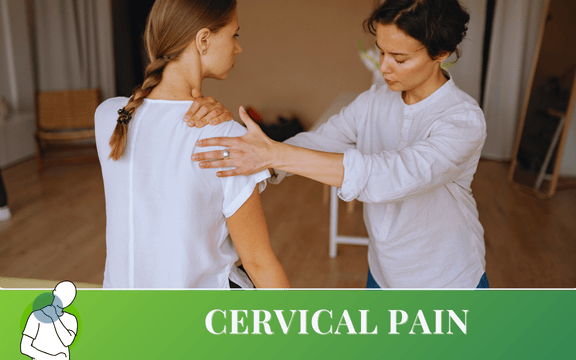
Cervical pain
Cervical or neck pain is often not just a local problem. From an osteopathic perspective, it commonly reflects imbalances involving the cervical spine, upper back, shoulders, muscles, fascia, nerves, posture, and stress levels. Poor posture, prolonged screen use, emotional stress, injury, and degenerative changes can overload the neck, leading to pain, stiffness, headaches, dizziness, and arm symptoms.
Neck pain may present as stiffness, sharp or dull pain, muscle tightness, restricted movement, or pain radiating into the shoulders, arms, or head. If left untreated, it can affect sleep, concentration, posture, and overall quality of life.
Osteopathic View of Treatment at IPMH
At the Institute of Physical & Mental Health (IPMH), we focus on identifying and treating the root cause of cervical pain, not just the symptoms.
Cervical muscle spasm occurs when the neck muscles contract involuntarily and remain tense. This is commonly caused by prolonged poor posture, long hours of screen use, emotional stress, sudden neck movements, or sleeping in awkward positions. Muscle spasms restrict blood flow, limit movement, and often cause pain that worsens with head rotation or prolonged sitting. They may also contribute to tension headaches and shoulder discomfort.
Treatment at IPMH
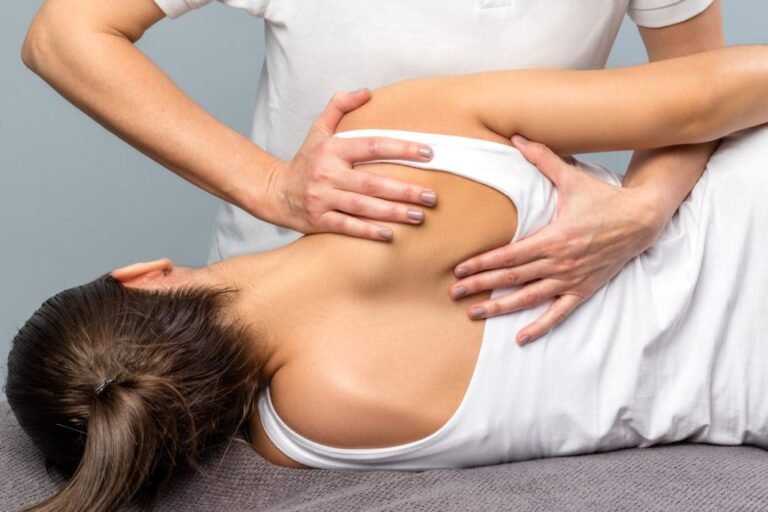
Osteopathic treatment focuses on releasing muscle and fascial tension, improving cervical and upper-back mobility, and correcting postural strain.
Laser therapy may be used to reduce inflammation and pain in acute or persistent muscle spasm.
Matrix therapy is beneficial for improving circulation and relaxing deep muscular tension
Cervical spondylosis is a degenerative condition involving wear and tear of the cervical spine joints and discs. It commonly develops with age but can be accelerated by poor posture, repetitive strain, or previous neck injuries. Symptoms may include chronic neck pain, stiffness, reduced range of motion, headaches, and in some cases pain, tingling, or numbness radiating into the arms due to nerve involvement.
Osteopathy helps improve joint mobility, reduce stiffness, and optimise cervical and thoracic spine mechanics.
Laser therapy may be used to help manage joint inflammation and pain associated with arthritic changes.
Magneto (PEMF) therapy can support circulation and tissue health in chronic degenerative conditions.
A cervical disc bulge or herniation occurs when the soft inner material of a spinal disc pushes outward or ruptures through its outer layer. This can irritate nearby nerves and spinal structures, leading to neck pain, shoulder pain, arm pain, tingling, numbness, or muscle weakness. Symptoms often worsen with prolonged sitting, poor posture, or repetitive neck movements.
Osteopathy focuses on reducing mechanical stress, improving spinal alignment, and restoring movement in surrounding joints.
Spinal decompression therapy may be used where appropriate to reduce disc pressure and nerve irritation.
Laser therapy can support disc and nerve healing by reducing inflammation.
Cervical radiculopathy develops when a nerve root exiting the cervical spine becomes compressed or inflamed. This can result from disc bulges, degenerative changes, joint stiffness, or postural overload. Pain often radiates from the neck into the shoulder, arm, or hand and may be accompanied by numbness, tingling, burning sensations, or weakness in the affected limb.
Osteopathic care aims to improve spinal mechanics and reduce joint and soft-tissue restrictions affecting nerve roots.
Spinal decompression therapy may be beneficial in cases involving disc-related nerve compression.
Laser therapy may be used to reduce nerve inflammation and pain.
Cervicogenic headaches originate from dysfunction in the cervical spine rather than the head itself. They are commonly associated with restricted neck movement, muscle tightness, and joint stiffness, often presenting as one-sided headaches that start at the base of the skull and radiate toward the forehead or behind the eyes. Poor posture, prolonged desk work, and neck injuries are frequent contributors.
Osteopathy focuses on restoring cervical and upper-thoracic mobility and releasing muscular and fascial tension contributing to headaches.
Matrix therapy may be used to improve neuromuscular coordination and circulation.
Magneto therapy can support nervous system calming and tissue recovery.
Conditions
Frozen Shoulder
Adhesive Capsulitis or Frozen Shoulder is mainly characterized by pain and stiffness in the shoulder joint. The causative factor is usually
Relieve pain & inflammation using Class 4 Laser to calm nerves and improve blood flow
Repair damaged tissue with Shockwave & Matrix Rhythm Therapy to rebuild healthy fibers
Restore joint movement through Osteopathic techniques that release stiffness and adhesions
Prevent recurrence by correcting posture, nerve flow, and shoulder movement coordination
Shoulder problems heal best when addressed early. Delaying treatment can prolong pain and stiffness.
Sudden or unexplained left-side shoulder pain may be cardiac in origin—urgent medical consultation is advised.