
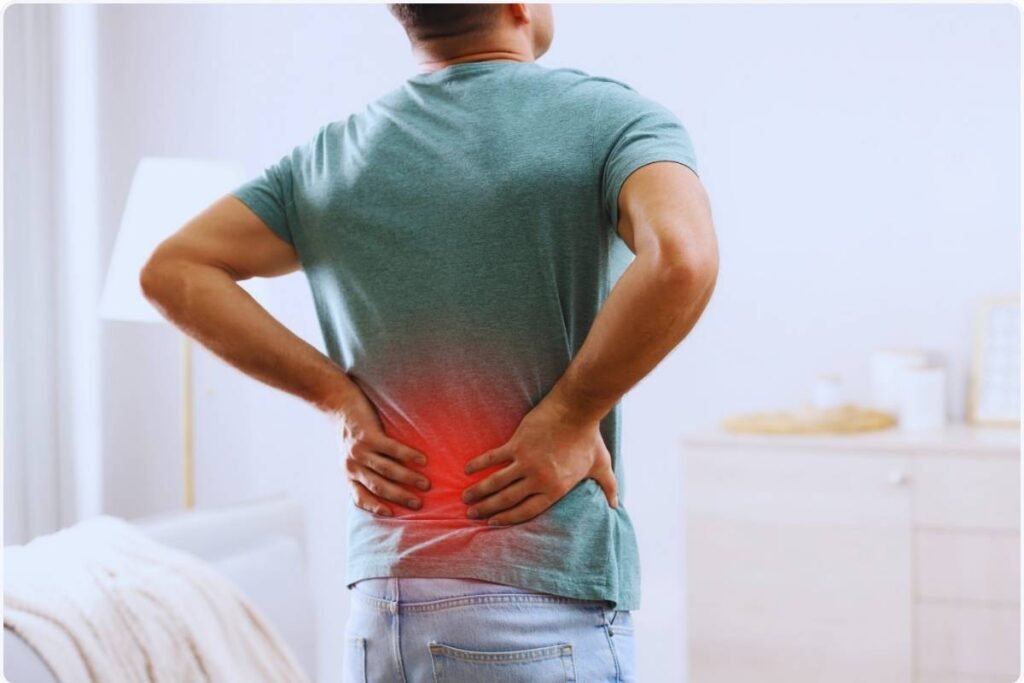
Back pain is one of the most common health problems today. Across cities like Pune and other urban areas, increasing sedentary lifestyles, desk jobs, and poor posture are contributing to rising cases of neck pain, lower back pain, and disc problems.
When people hear terms like slipped disc, disc bulge, or sciatica, the first question that
comes to mind is:
“Will I need surgery?”
The good news is that in most cases, the answer is no.
The Reality: Most Spine Pain is Not Surgical
If you have been diagnosed with a disc issue, take a deep breath.
Clinical experience and modern spine research show that around 90% of spine pain cases
do not require surgery. Most cases are caused by functional and mechanical problems
rather than permanent structural damage.
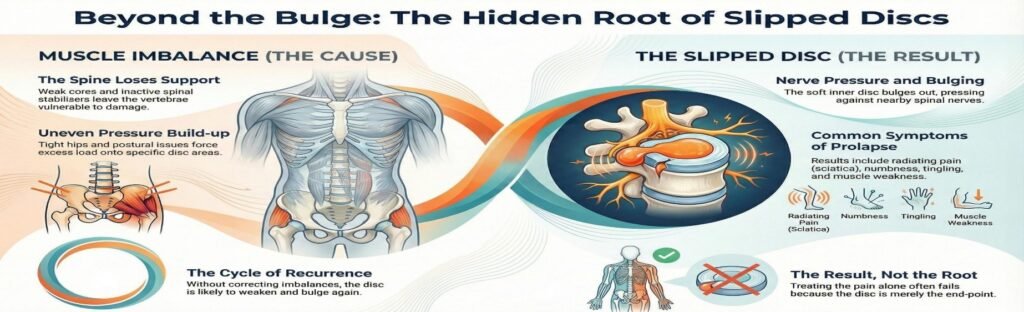
Even if an MRI scan shows a disc bulge, the pain is often triggered by underlying issues such
as:
This is why many patients seeking slipped disc treatment in Pune discover that their pain
improves with conservative and manual therapy approaches.
Only about 10% of spine conditions actually require surgery, typically when there is:
For the remaining 90%, the solution lies in restoring proper movement and balance in the
body.
What Exactly is a Slipped Disc?
A slipped disc, medically known as a herniated or prolapsed disc, occurs when the soft,
jelly-like center of a spinal disc pushes through a tear in the outer layer.
This may lead to symptoms such as:
However, an important perspective shift is needed.
Many people believe the disc is the starting point of the problem. In reality, the disc bulge is
often the result of long-term mechanical stress on the spine.
If you only treat the disc without addressing the underlying stress patterns, the pain often
returns.
The Hidden Culprit: Muscle Imbalance
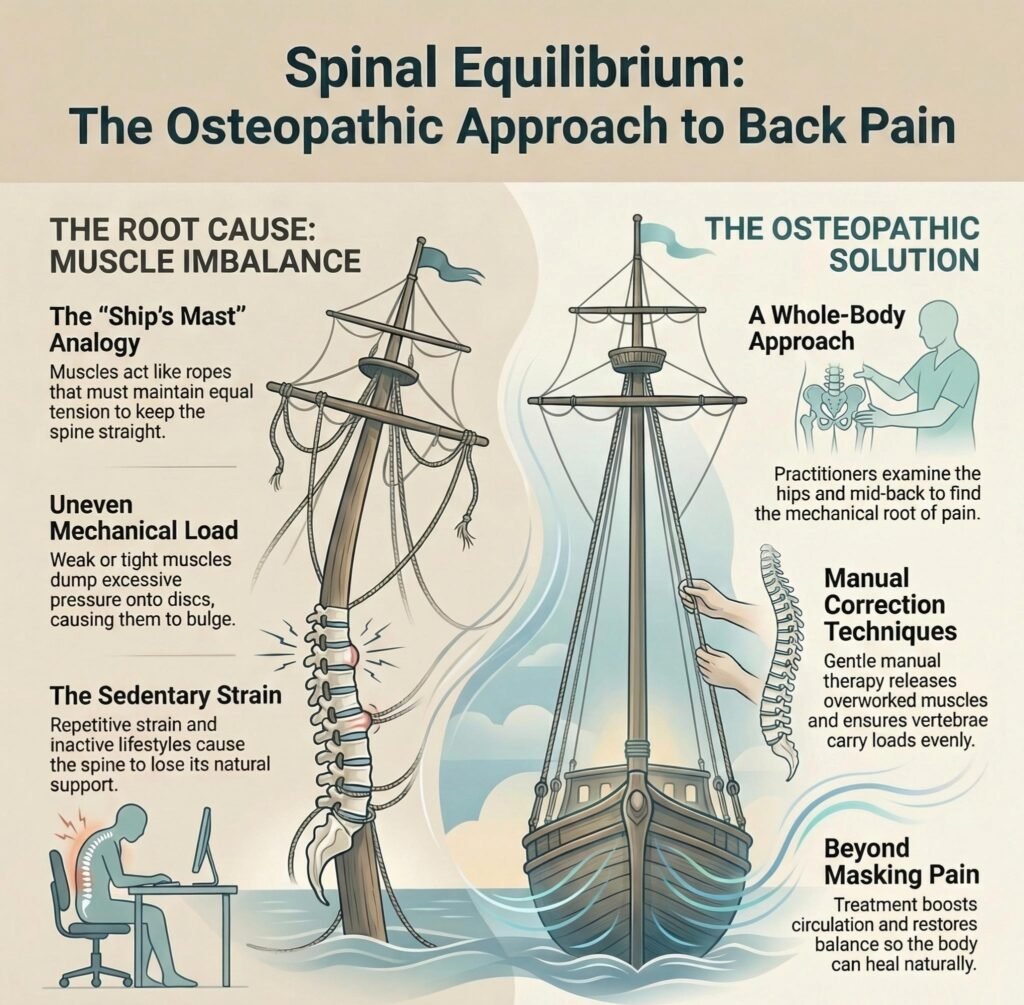
Think of your spine like a mast on a sailing ship.
The ropes supporting the mast are like your muscles. They must maintain balanced tension
from all sides to keep the structure stable.
But modern lifestyles—especially desk jobs, driving, and prolonged sitting—create:
When this imbalance happens:
This is why many patients searching for non-surgical slipped disc treatment in Pune benefit
from therapies that restore muscle balance and spinal movement.
How Osteopathy Changes the Game
If the problem is mechanical, the solution should be mechanical too.
This is where Osteopathy offers a unique advantage.
Instead of only focusing on the painful area, osteopathy examines how the entire body
functions together.
For example, if someone has lower back pain, the real issue might originate from:
When these areas stop functioning properly, the lower back is forced to compensate,
leading to pain and disc stress.
A Whole-Body Approach to Spine Pain
Osteopathy is a hands-on treatment approach that focuses on the relationship between:
This approach is increasingly gaining popularity among patients seeking holistic back pain
treatment in Pune.
Correcting the Root Cause
Osteopathic treatment uses gentle manual techniques to:
Correcting the Root Cause
Supporting natural healing of inflamed tissues.
By correcting the biomechanical root cause, osteopathy aims to solve the problem rather
than temporarily masking the pain.
The Path to Recovery Starts with the Right Evaluation
Spine pain is complex, and every body is different.
A generic exercise routine or painkiller rarely solves the underlying issue.
The first step toward avoiding unnecessary surgery is a detailed clinical evaluation that
identifies:
This approach is particularly important for people experiencing chronic back pain, neck
stiffness, or sciatica in Pune, where sedentary work culture is common.
Don’t Let Fear of Surgery Control Your Decisions
If you’ve been diagnosed with a disc bulge, slipped disc, or sciatica, remember:
Most spine pain can be treated without surgery.
With the right assessment, manual therapy, posture correction, and rehabilitation, many
patients recover fully and return to normal activities.
Ready to Find the Root Cause of Your Pain?
If you’re struggling with persistent back pain, neck stiffness, or sciatica, it’s time to look
beyond the symptoms.
A comprehensive clinical evaluation can help identify why your spine is under stress and
guide you toward the right treatment plan.
Visit IPMH Clinic for a detailed assessment and discover effective non-surgical spine care
in Pune.
Let’s work together to restore your movement and help you live pain-free—without
unnecessary surgery.